Critics evaluate acting through specific, observable choices rather than general impressions of believability. The core questions are consistent: what does the actor do in the gap between lines, how do they use their face and body at scale, and does the performance serve the character's arc rather than the actor's presence. Learning these categories turns acting from a mystery into a craft you can actually watch.
Why do critics say film acting is about reaction?
Because the camera cuts between faces, and the most information lives in listening. A trained screen actor performs in reaction shots, the pause before answering, the flicker when a name is mentioned, the controlled stillness while someone else speaks. Critics watch the non-speaking actor, since that is where unguarded character lives. Performances praised for reaction work often read as effortless, which is exactly why audiences underestimate the technique involved.
What is the difference between stage and screen technique?
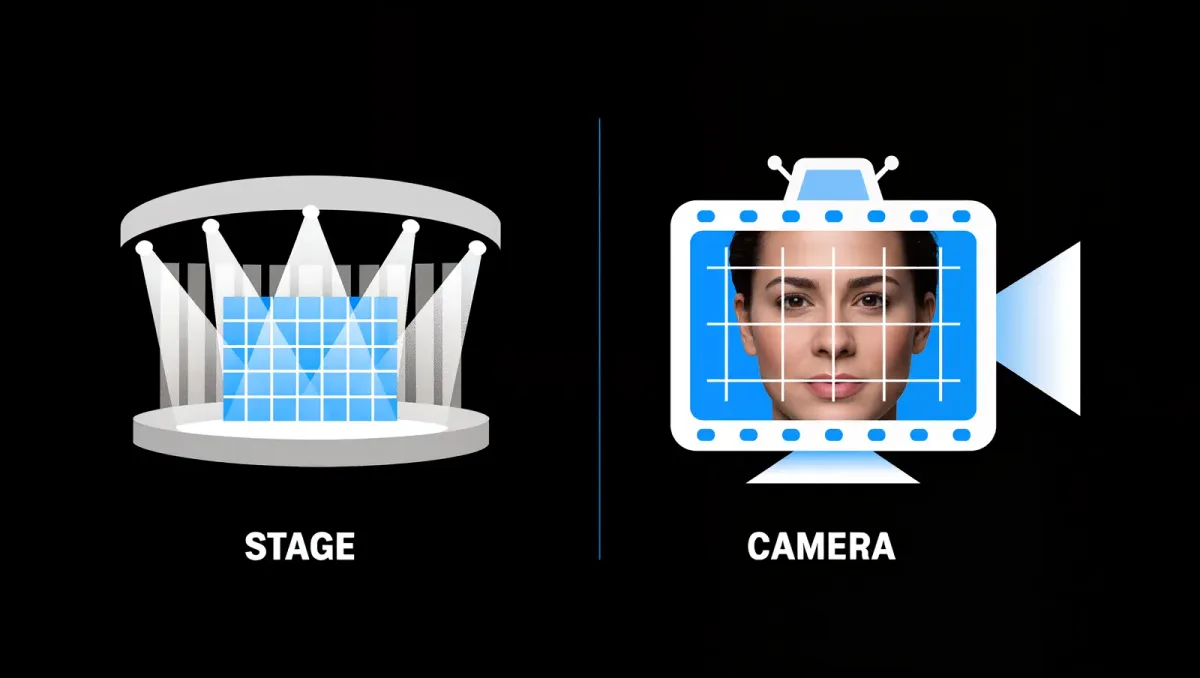
Scale. Stage acting projects, using voice and gesture sized for the back row, while screen acting contracts, calibrated for a lens inches away. On film, an overlarge theatrical choice reads as false, and a barely visible eye movement can carry a whole scene. Critics often flag theater-trained actors by how they modulate: the skill is not playing small exactly, but controlling exactly how small, and the best film actors shift scale within a single scene as the camera distance changes.
How does casting shape a performance?
More than most viewers realize. Casting is the first creative act of a performance, and critics assess fit: does the actor's natural persona create the right friction or comfort with the role? Playing with persona, casting a comedian against type in a drama, can generate meaning by itself, while miscasting forces an actor to fight their own screen presence. Much of what reads as a performance problem is often a casting decision.
What do critics mean by actor presence and star quality?
Presence is the ability to hold attention without action, and critics track it deliberately, noticing whose face the eye goes to in a crowded frame. Star quality is presence plus persona: a set of associations the audience brings into the theater. Great performances often negotiate with that baggage rather than erasing it, using what the audience already believes about the actor as dramatic material. That negotiation is why career-capping late performances by stars, playing against decades of image, land so powerfully.
- Reaction work in silent moments
- Scale control between stage and screen technique
- Physical transformation that serves character, not display
- Voice and accent integrated into emotion
- Consistency of arc across a whole film or season
Is transformation overrated?
Critics debate this constantly. Weight change, prosthetics and accent mimicry are the most visible markers of craft and the most rewarded by awards bodies, but many critics argue they reward effort over truth. A transformation that changes the surface while the inner life stays generic is impersonation, not acting. The performances critics defend most passionately are often unshowy ones, where the transformation is behavioral, how the character walks, waits and deflects, invisible to a casual viewer and unmistakable to a trained one.
How do critics judge ensemble work?
By listening. In a strong ensemble, actors adjust their rhythm to each other, creating overlapping, interrupting conversation that sounds lived-in, and each performer's choices make the others better. Critics watch whether supporting players shape a coherent world or compete for attention. Ensemble quality is why the Screen Actors Guild's cast award, voted by actors themselves, is often a sharper measure of performance craft than individual prizes.
Can a bad film contain a great performance?
Absolutely, and defending those performances is a recurring critical duty. Acting is separable from writing and direction, and a skilled actor can build a full person from thin material. Critics regularly single out one performance as the reason to see an otherwise weak film, because craft is visible even when the surrounding movie fails. Watching for those performances trains your eye more than any perfect film can.
How can you watch acting more actively?
Pick one practice at a time. Watch only the listener in a two-person scene. Notice when an actor turns away or goes still, and ask what the choice communicates. Compare a performer's work across two films to see persona versus character. Acting rewards this attention faster than any other film craft, because the instrument is a human face, and you have spent your whole life reading faces already.