By the start of 2026 the streaming wars had produced a winner, several survivors and a lot of closed services. Netflix reported more than 325 million paid subscribers in its fourth-quarter 2025 results in January 2026, with full-year revenue of roughly 45 billion dollars. Disney+ and Max remain the largest challengers, while smaller platforms have merged, folded or retreated into licensing. The battle is no longer only about sign-ups. It is about advertising money, live sport and the hours viewers spend anywhere else, including YouTube.
How did the streaming wars start?
The conflict began in November 2019, when Disney+ launched and took about 10 million sign-ups on its first day. Apple TV+ had arrived weeks earlier, HBO Max followed in May 2020 and Peacock in July 2020. Each company wanted its own Netflix, and each spent billions on originals to pull viewers away from cable and from each other. For several years the industry measured success by subscriber growth, even when that growth lost money. Wall Street rewarded scale, and studios ordered enormous slates to feed it.
What changed in the middle of the fight?
Two things reset the market. The first was the Warner Bros. Discovery merger in April 2022, which combined HBO Max and Discovery+ and began a wave of cost cutting across the industry. Projects were cancelled, libraries were licensed back out, and several services disappeared entirely. The second change was financial discipline. In 2022 and 2023 investors stopped rewarding growth at any price and started demanding profits. Streamers responded with price increases, advertising tiers and stricter decisions about which shows survive.
Who is actually winning?
Netflix is the clearest answer. It is the most profitable streamer, it stopped reporting quarterly subscriber counts in 2025 because its scale was no longer in question, and its advertising business grew to more than 1.5 billion dollars in 2025. Disney+ holds a strong second position, helped by franchises and the integration of Hulu. Max competes on prestige drama and library depth. Paramount+ and Peacock continue, but with smaller footprints. Analysts now describe the market as a hierarchy rather than an open war.
What happened to the smaller services?
Consolidation removed most of them. CNN+ shut down weeks after launching in 2022. HBO Max and Discovery+ merged into Max in 2023. Showtime was folded into Paramount+ in the same year. Bundling became the quiet solution for everyone else: Disney offers Disney+, Hulu and ESPN together, and several rivals sell combined packages through Amazon and other aggregators. The standalone mid-size streamer has mostly stopped existing as a business model.
Why does YouTube matter to this story?
Because attention, not subscriptions, is the new scoreboard. Nielsen's viewing data through 2024 and 2025 consistently showed YouTube taking the largest single share of American TV screen time, ahead of every individual streamer. Executives including Netflix leadership now name YouTube and TikTok as primary competitors rather than other studios. The fight in 2026 is over total hours watched, and free short-form video is taking a growing portion of them.
What is the role of live sport and advertising?
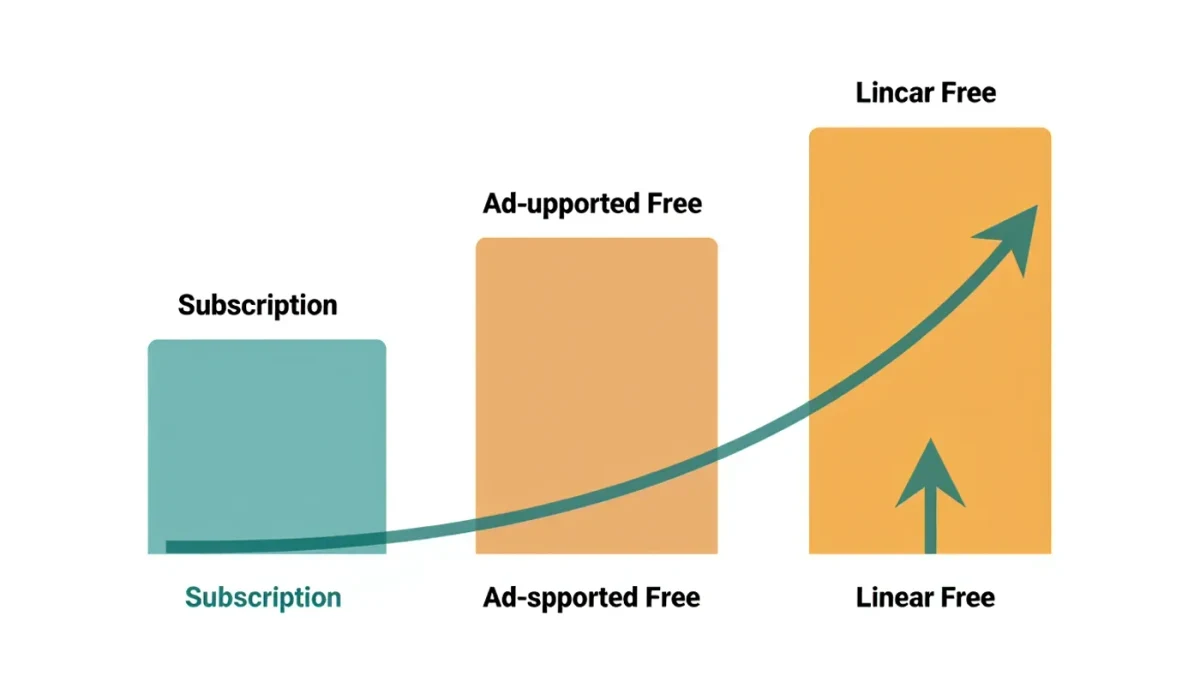
Both became central. The NFL games on Netflix since Christmas 2024, weekly NBA packages on Amazon's Prime Video from the 2025-26 season and live events on other platforms proved that sport drives sign-ups better than scripted drama. Advertising grew from an experiment into a pillar: cheaper ad-supported tiers now represent the majority of new sign-ups on several services, and Netflix expects its ad revenue to roughly double in 2026. That shift changes what gets made, favoring formats that suit commercials and broad audiences.
What does this mean for viewers?
Higher prices and fewer homes for new shows. A household that wants the top three services pays meaningfully more in 2026 than in 2020, which is why ad-supported tiers and bundles have grown so quickly. Cancellations after one season have become normal, because platforms renew based on completion data and cost rather than buzz. On the other hand, licensing is back: shows move between services again, and older titles that vanished during the exclusive era are easier to find.
What comes next after the streaming wars?
The likely shape of 2026 and beyond is a stable oligopoly. Netflix, Disney and a combined Warner Bros. Discovery operation hold most paid subscribers, Amazon and Apple treat video as part of larger businesses, and everyone competes against free video for attention. Expect more bundling, more live programming and continued price rises rather than another round of launches. The wars ended not with a decisive battle but with a market that finally behaves like a normal business.