An entertainment news podcast does one simple job: it turns the day's celebrity headlines into something you can absorb without looking at a screen. The format took over commutes because it fits the one part of the day when listeners have time but no free eyes. A show recorded the evening before, edited overnight and published by morning means a listener hears the latest casting news before the workday starts.
The speed is the real story. A daily entertainment podcast runs on a production line, not a newsroom of specialists. One or two hosts, a producer, sometimes a researcher. The show is planned hours before it is recorded, recorded in a single session, and cut the same night. That clip-speed cycle shapes what these shows cover and how they cover it.
The question behind the format is the plainest one in English. Vocabulary.com defines "why" as the cause or intention underlying an action, and the cause here is practical: listeners want a fast, spoken summary of a beat that used to arrive through print or television. The podcast simply moved that summary into the earbuds.
Why did podcasts fit the commute so well?
The commute is a fixed, screenless block of time. Reading a feed on a train means holding a phone; listening means not holding anything. A twenty-minute daily show maps neatly onto a bus or subway ride, and a daily publishing rhythm means the listener never falls behind. Missing three days of a website costs nothing. Missing three days of a daily show feels like losing the thread.
Audio also suits the tone. Entertainment coverage is conversational by nature, and a host speaking plainly about a trailer drop or a casting confirmation sounds like a friend catching you up. That warmth is hard to reproduce in a headline and a photo gallery. It is one reason the format holds listeners day after day rather than only on big news days.
There is a structural reason too. Streaming and social platforms changed how quickly a celebrity story spreads, and our streaming coverage tracks the same shift in how people watch shows. Podcasts sit at the end of that chain: they collect what already spread overnight and explain it in one place.
How does a daily show get made overnight?
The production line runs on a tight clock. Early in the day, a producer builds a rundown: the stories that broke overnight, the ones expected to break, and any pre-planned segments like a trailer reaction or a quick explainer. The host reads the rundown, flags what needs context, and the team decides what makes the cut. Anything without a clear source or a clear angle gets dropped.
Recording usually happens in the late afternoon or evening. A daily show rarely records more than one take per segment, because the schedule does not allow it. Editing follows: trimming pauses, tightening the rundown, adding any music or transitions. The episode is published overnight so it is waiting in the feed by morning. The whole cycle from rundown to published episode often fits inside a single working day.
What this means for quality is a trade-off listeners rarely see. Speed favors stories that are easy to verify quickly: official announcements, studio press releases, confirmed casting. It disfavors stories that need a day of calls. A good daily show is honest about that gap, and treats fast confirmations as news and slower questions as material for a weekly or longer episode.
What do these shows actually cover?
The bread and butter is confirmation news: a role cast, a release date set, a tour announced, a trailer arriving. Those stories are short, sourced and satisfy the daily rhythm. Around them sit service segments, where the show explains something rather than reports it. A segment on how a film qualifies for awards, for instance, works in audio exactly as our written guide to how a film qualifies for an Oscar works on the page.
Awards season is the annual peak. When nominations land, a daily show can build a full episode around a single morning: who made the list, who missed it, and what it signals for the ceremony. The same logic applies to red-carpet season, where the show summarizes looks and credits the next day. Our own Oscars 2026 carpet coverage follows the same beat: occasion, credits, and why the appearance matters. For related coverage, see Oscars 2026: a record field before the big carpet.
The third pillar is context. A trailer drops; the show explains what the project is and who is behind it. A stylist trend appears on a carpet; the show traces where it came from. That connective work is what separates a useful daily show from a headline read aloud, and it is the part listeners reward with loyalty. We covered a connected angle in What a stylist actually does before a red carpet.
How do hosts keep it fast without getting it wrong?
Discipline does most of the work. Reputable daily shows separate what is confirmed from what is reported, and say so out loud. A casting confirmation from a studio gets stated as fact. A trade report gets attributed to the trade. A rumor gets labeled a rumor or left out entirely. On a show recorded in one take, that labeling has to be built into the rundown before the host ever speaks.
Corrections also work differently in audio. There is no edit button after publication, so a show that gets something wrong addresses it on the next episode. Listeners tend to forgive a fast, plain correction more than a silent one. The best daily shows treat the next day's opening as their correction slot.
Our analysis is that the format's speed is a feature only when paired with visible standards. The shows that lasted are the ones that say who told them what, every time, in the same calm voice. Flash fades; a track record of being right does not.
Where is the format heading?
The likely direction is more specialization. Daily general shows now share space with podcasts focused on one awards beat, one franchise universe or one streaming platform. That mirrors what happened to written entertainment coverage, where broad sections gave way to focused verticals like our celebrity desk. Specialist shows can go deeper on slower days and still publish daily.
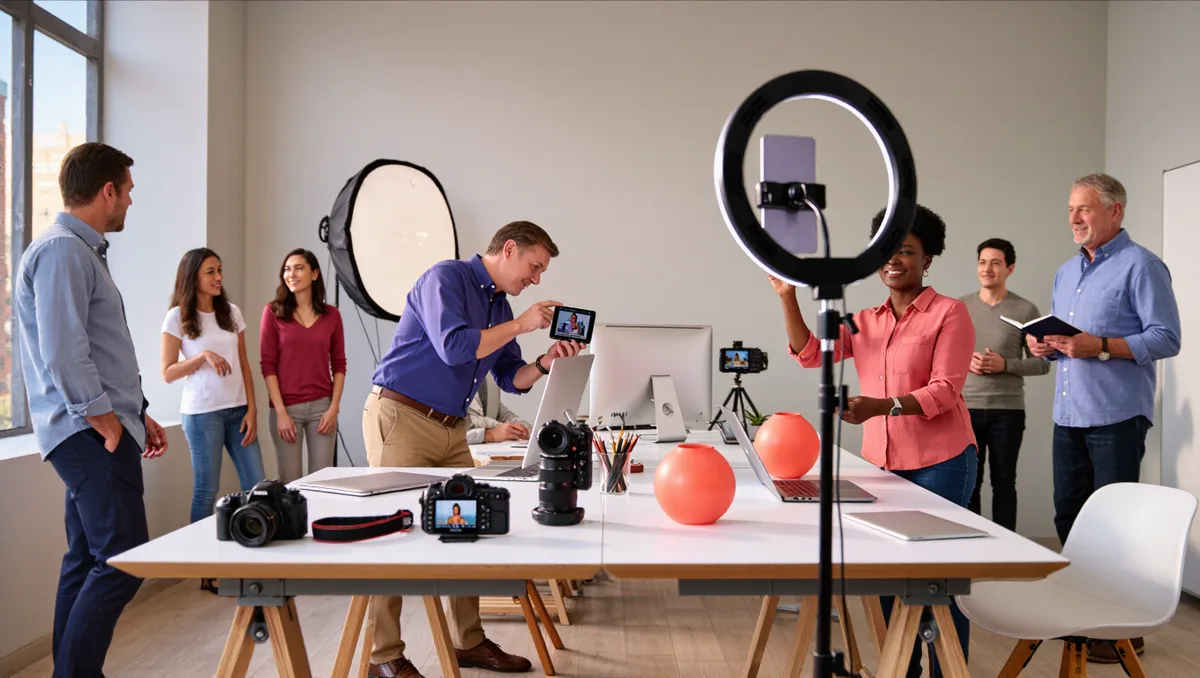
Video versions of the same episodes are also common now, recorded with cameras so the audio feed and a video feed come from one session. That is a distribution choice, not a format change: the production line stays the same, and the commute listen stays the core use.
What the evidence of the format itself establishes is simple: daily entertainment podcasts won the commute by matching a fixed listening window with a fixed publishing rhythm. What remains unknown is how much of that habit survives if commutes keep shrinking or shifting. For now, the rundown, the one-take session and the overnight edit remain the quiet machinery behind a very ordinary morning habit.