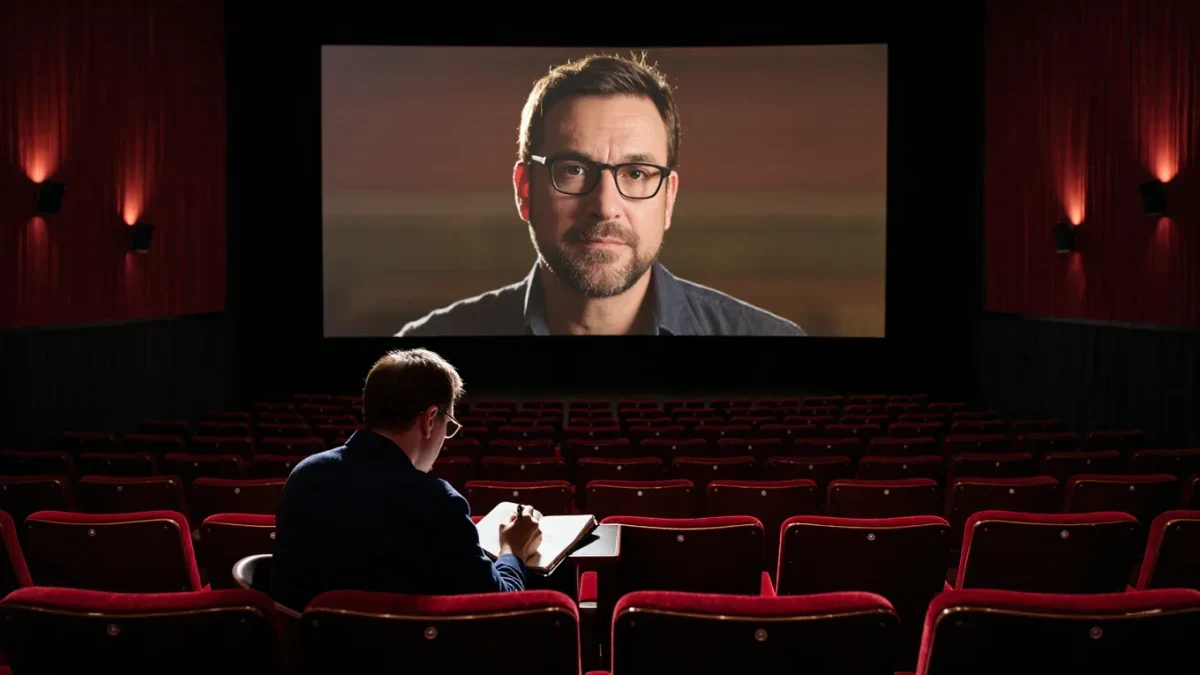
A film critic watches movies professionally, then explains in published writing what a film does, how it does it and whether it works. That sounds simple, but the job involves daily press screenings, tight deadlines, interviews, festival coverage and a constant obligation to justify taste in public. The modern critic is less a gatekeeper and more a translator between the craft of filmmaking and the audience deciding what to watch on a Friday night.
Is a critic the same as a reviewer?
Not quite, though the overlap is large. A reviewer answers the practical question: is this film worth your time and money? A critic goes further, placing the film in context, comparing it to the director's earlier work, tracing its influences and analyzing how its technique produces its effect. In practice most working critics do both in the same piece, because a review that only says yes or no gives the reader nothing to hold onto.
What does a typical working week look like?
Screenings dominate. A staff critic at a major outlet can watch four to six films a week, many at morning press screenings held weeks before release. After each screening comes the writing: newspapers and websites usually want the review filed a day or two before the film opens, sometimes within hours of an embargo lifting. Festival season compresses everything, with critics watching three to five films a day at Venice, Toronto or Cannes and filing reviews the same night.
- Press screenings, often daily, under embargo
- Reviews filed on deadline, frequently same-day
- Interviews with directors and actors
- Festival coverage in concentrated blocks
- Longer essays and retrospectives between releases
What do critics actually analyze in a film?
The core tools are consistent across the profession. Critics look at structure, meaning how scenes are ordered and whether the pacing holds. They watch performance, not just whether acting feels convincing but what choices actors make in key scenes. They track visual language: camera placement, cutting rhythm, color, sound design. And they weigh intention against result, asking what the film seems to be attempting and whether the attempt lands. A good review names specific scenes, because evidence is what separates criticism from opinion.
Do critics need formal training?
There is no license and no single path. Many studied film, literature or journalism; others came from programming cinemas, working as programmers at festivals or writing their way up from blogs. What the profession demands is a demonstrable body of work, a wide viewing history and the ability to write clearly on deadline. Knowledge of film history matters more than any diploma, because context is the critic's main raw material.
How has the job changed since the internet?
Enormously. In the newspaper era, a handful of print critics shaped national conversation. Today criticism is distributed across staff writers at major outlets, freelance critics, academic writers and independent voices on newsletters and video channels. Aggregators collect all of it into scores, which changed how reviews are consumed: many readers meet a critic's work as a percentage rather than as prose. Meanwhile social media means critics defend and discuss their judgments publicly, sometimes with filmmakers themselves.
Does a negative review hurt a film?
Less than it used to, and it always depended on scale. Individual reviews rarely move a wide-release blockbuster, whose audience is driven by marketing and franchise loyalty. For small independent films, a cluster of strong reviews can be the difference between a theatrical run and oblivion, which is why festival reception matters so much for titles without advertising budgets. Critics concentrate influence where audiences have least information.
What separates a good critic from a bad one?
Three things, consistently. First, evidence: the good critic points at actual scenes and techniques rather than gesturing at feelings. Second, consistency: their standards are legible over time, so a reader learns how to calibrate against them. Third, generosity of purpose: the best criticism wants film culture to be better, not just to be right. Sarcasm and cruelty are easy; useful judgment is the craft.
Why does the profession still matter?
Because the supply of content has outpaced attention. Streaming platforms and a heavy release calendar mean more films and series each year than any viewer can sort. Critics provide a filter built on knowledge rather than algorithms, and their archives form a running record of how culture received its own stories. The mythology of the critic as an enemy of pleasure misses the point: most people in the profession took the job because they love the medium.