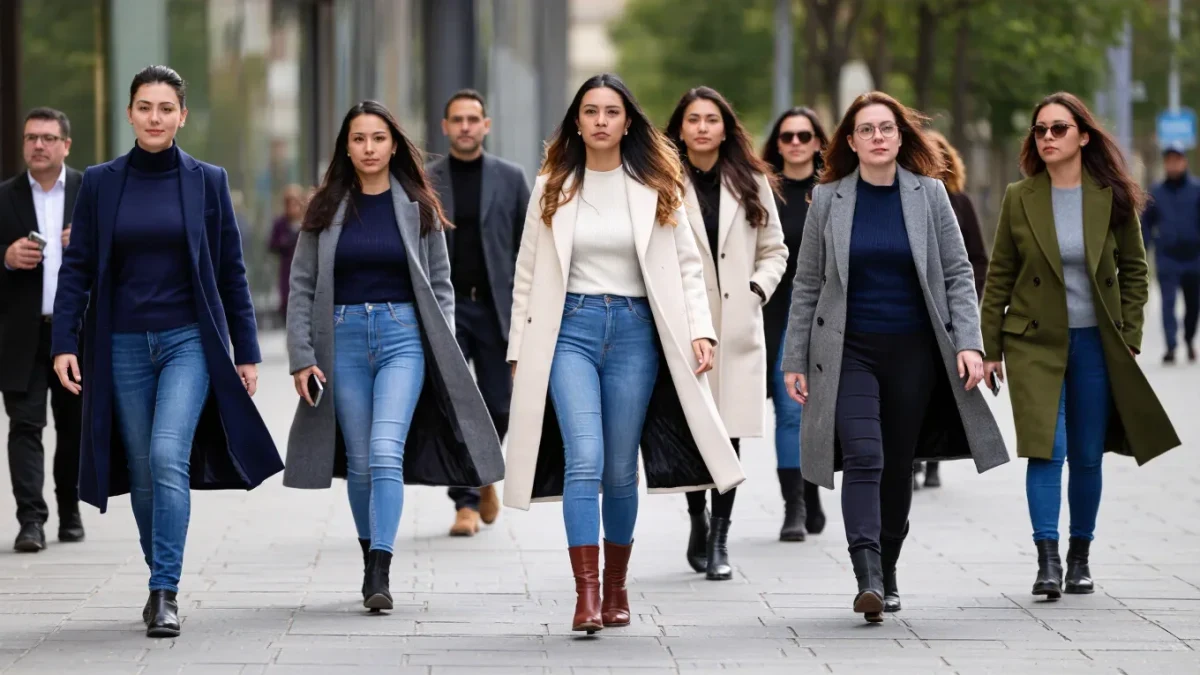
Airport looks are the outfits celebrities wear traveling, photographed by paparazzi and read by fans as their real, off-duty style. The truth is less casual than it appears: many of these looks are planned as carefully as a red carpet, just styled to seem effortless. A celebrity arrives at a terminal, walks a known route past waiting photographers, and the images circulate within hours.
Why do terminals attract cameras at all? Because they are one of the few places a famous person must walk slowly through a public, well-lit space on a predictable schedule. As Wikipedia notes in its overview of airport infrastructure, larger airports are built around passenger facilities such as terminals, restaurants and lounges — long corridors designed to move crowds of people through open, photographable space. That design, plus fixed arrival and departure times, makes the airport the most reliable place to photograph someone who otherwise controls where they are seen.
How does an airport look actually get arranged?
The process mirrors red carpet prep, with one key difference: the goal is to look unplanned. A stylist or the celebrity's own team chooses pieces that photograph well in flat daylight, survive a long flight without wrinkling badly, and read as personal rather than promotional. Comfort matters, but so does the walk from the car door to security, because that is the stretch where the pictures happen.
Some appearances are arranged outright. A publicist or brand team may tip off photo agencies that a well-known client will be at a specific terminal at a specific time. The celebrity dresses for the walk, the photographers get usable images, and everyone leaves with something: the star gets visibility, the agency gets sellable pictures, and the brand whose sunglasses or sneakers appear gets a quiet endorsement no advertisement could buy. Not every airport photo is staged, but the ones that circulate most widely rarely happen by accident.
This is the same machinery described in our piece on what a stylist actually does before a red carpet, just pointed at a different destination. The craft is identical: plan the look, control the frame, know where the cameras will stand.
Why did airport style become a thing at all?
Three forces turned terminals into unofficial catwalks. First, celebrity media shifted from monthly magazines to daily online coverage, which needs a constant supply of images. A premiere happens a few times a year; a flight happens weekly. Second, the rise of athleisure and luxury loungewear gave celebrities something to wear that is both genuinely comfortable and recognizably expensive. Third, social media turned fans into distributors: a single terminal photo can be reposted, analyzed for brand labels, and turned into shopping guides within a day.
The airport look also fills a gap in a celebrity's public image. Red carpets show the couture version of a person; airports show the claimed real version. Both are performances, but audiences respond to the second one as if it were a confession. That is the trick, and it works.
What makes an airport look different from street style?
Street style is photographed wherever the subject happens to be. Airport style is photographed in a corridor the subject cannot avoid, carrying luggage, usually tired, often moving at a forced pace. The best airport looks account for all of it: layers that can be removed for security, shoes that slip off easily, sunglasses that handle both terminal glare and morning arrivals, and one or two logo-visible pieces that make the image commercially legible.
Our explainer on how a public person builds a capsule wardrobe that survives every camera covers the underlying logic. Airport dressing is that capsule thinking under pressure: few pieces, high versatility, everything camera-safe from every angle. We covered a connected angle in How a public person builds a capsule wardrobe that survives every camera.
How to find the wearable version of an airport look
Here is the practical part. Most celebrity airport outfits are built from a small set of categories, and nearly all of them exist at accessible price points.
- The base layer: a plain tee, ribbed tank or soft knit in black, white, grey or cream. This is the easiest piece to match; quality cotton basics cost little at mainstream retailers.
- The third piece: an open cardigan, bomber, trench or oversized blazer. This is what makes the outfit look styled rather than sleepy, and it is usually the piece worth spending on.
- The trousers: wide-leg sweatpants, relaxed denim or soft tailoring. The silhouette does the work; the label does not.
- The accessories: sunglasses, a cap or sleek headphones, plus one structured bag. Accessories are where the expensive versions differ most visibly from affordable ones, so decide how much that matters to you.
- The shoes: clean sneakers or flat boots. Comfort is non-negotiable here because the look assumes real travel.
Our analysis: the celebrity version of an airport look is roughly 20 percent garment and 80 percent context — the terminal, the luggage, the entourage, the light. Copy the outfit and you get the outfit. Copy the confidence of walking somewhere with somewhere to be, and you get closer to the picture.
What this means for how you read these photos
Treat airport photos as content, not documentation. A celebrity who looks immaculate at a departure gate has likely planned to look immaculate at a departure gate, possibly with a brand in mind. A celebrity who looks rumpled may simply have declined to perform that day, which is its own kind of information. Neither image tells you much about the person; both tell you a lot about the machine around them.
The same skepticism applies to the shopping guides that follow every viral terminal photo. Identifying the exact sunglasses is useful. Believing the outfit was thrown on by accident is not.
Airport looks endure because they sell a fantasy that feels within reach: the idea that style is something you wear to the grocery run, not just the gala. The fantasy is manufactured, but the pieces are real, the silhouettes are learnable, and the wearable versions are a search away. That is more honest than most fashion promises, and it is the part worth keeping.