A trend spreads when three things line up: something new appears, a visible group adopts it, and a system — social, commercial, or algorithmic — carries it past that first circle. Remove any one of the three and the idea stalls. This is why most looks never leave the runway and why some, like ballet flats, return decade after decade.
The mechanics are less mysterious than they look. Researchers have described diffusion for decades in terms of adopter groups: innovators take the risk, early adopters give it credibility, the early majority makes it normal, and the late majority arrives once the thing is already everywhere. What has changed is speed. A trend that once took seasons to cross a country can now cross the world in a weekend, because the middle of the funnel — the part that used to be gossip, magazines, and mall buyers — has been replaced by feeds.
What this means for a reader is simple: you can learn to spot where an idea is in its life cycle. That skill works whether the trend is a silhouette, a color story, or a needle-drop that turns up in every third video on your feed.
Where does a trend actually begin?
Most durable trends begin in a small, visible community with a reason to dress or act a certain way. Ballet dancers wore wrap tops and leg warmers because the studio demanded it; the aesthetic then escaped the studio. Screen culture accelerates this escape. A costume on a hit show, a press-tour wardrobe, or a performer's off-duty look gives a subculture's practical clothing a story — and stories travel faster than function. We covered a connected angle in Press tour fashion: the mechanics of a season-long style narrative.
The first adopters rarely think of themselves as starting anything. They are solving a local problem: what to wear to rehearsal, what reads well on camera, what photographs cleanly. The trend becomes a trend when outsiders start copying the solution without the original context. That moment — the borrowing — is the true birth of diffusion.
Who carries it, and why does credibility matter more than reach?
The classic diffusion model gives each group a job. Innovators supply novelty. Early adopters supply trust: they are visible enough to be imitated and discerning enough that their choices look considered rather than random. The early majority then needs only reassurance — proof that the thing is safe to like.
This is why a trend carried by one well-placed figure often outperforms one pushed by a mass campaign. Credibility is the currency, not audience size. A stylist's archive pull, a dancer's off-duty uniform, or a director's set design can seed an idea that no advertisement could launch, because the audience reads the choice as taste rather than persuasion.
Our analysis of recent style cycles bears this out in a specific way: the looks that lasted longest were the ones that arrived attached to a person and a narrative, not a product. A trend with an author ages well. A trend with only a hashtag usually does not.
How do algorithms change the speed of spread?
Recommendation systems do not create trends, but they decide which experiments survive. When a piece of content earns engagement, the system shows it to more people; when the copies also perform, the format itself gets amplified. The result is a feedback loop: adoption generates visibility, visibility generates more adoption. The curve steepens.
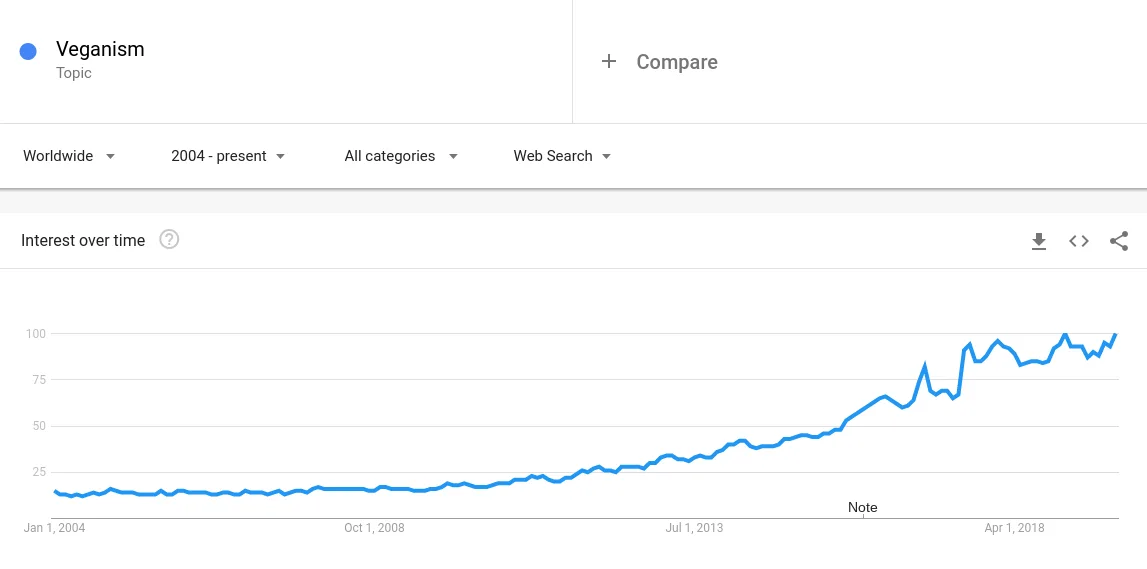
The measurable side of this is search behavior. When enough people look up a term, trend-tracking services start to notice. Exploding Topics maintains a running list of the top 100 trending topics in the United States, generated by what the outlet describes as a proprietary algorithm and trend curation process, and its October 2026 list mixes style ideas like balletcore, with a reported 4,000% five-year search growth, alongside tools and products. The list's editors draw a useful line: these are framed as long-term trends with expected growth into 2027, not fads like a new movie or game.
That distinction matters. A fad spikes and dies in weeks because it has no depth — no community, no practice, no reason to return. A trend with roots in a real activity, like ballet-inspired dressing, can fade from feeds and still come back, because the underlying reference never disappeared. The feed is an amplifier, not the engine. Readers following this should also see Fashion trends that keep coming back: a timeline of the return.
What are the stages of a trend's life cycle?
Watch for these phases, which repeat across fashion, music, and screen culture:
- Emergence. A small community develops a practice for its own reasons. Almost nobody outside notices.
- Borrowing. A visible figure or production adopts the practice and gives it a story. Imitation begins.
- Amplification. Feeds, search, and retail pick it up. Copies multiply, and the look becomes legible as a trend with a name.
- Saturation. The early majority has arrived. The originators move on, and the trend starts to feel ordinary.
- Decline or return. The idea either dissolves or goes dormant — waiting, often decades, for a revival.
The stages are easy to see in hindsight and hard to date in real time, because they overlap. A trend can be saturated in one city and still emerging in another. Global feeds compress that lag, but they do not erase it.
How can you tell a lasting trend from a fad?
Ask three questions. First, does the trend serve a function or a story beyond novelty? A silhouette that flatters many bodies, or a practice that solves a real problem, has somewhere to live after the hype. Second, does it have a community of origin — people who would keep doing it even if nobody was watching? Third, is it cheap to adopt? Low-cost entry, like a charm on a bag or a pastel palette, accelerates spread but also invites quick abandonment; high-cost entry slows the curve but tends to hold.
Practical steps for the reader: notice what you are seeing repeated, then check whether the repetition comes from many unrelated sources or one campaign. Many unrelated sources suggest organic diffusion. One campaign suggests marketing, which is not fake — but it behaves differently, and it ends when the budget does.
Trends, in the end, are stories about belonging. The mechanics of spread — adopters, credibility, amplification — describe how the story travels. What the story means, and whether it deserves a place in your wardrobe or your watchlist, is a judgment the data will never make for you.