Men's formal wear runs on a small set of codes that most invitations never explain. A tuxedo is not a suit, black tie does not literally require black, and white tie is a different garment entirely. For actors on press tours and anyone attending a gala or premiere, understanding these categories is the difference between looking dressed and looking dressed for the event. Here is how the system works.
What is black tie, exactly?
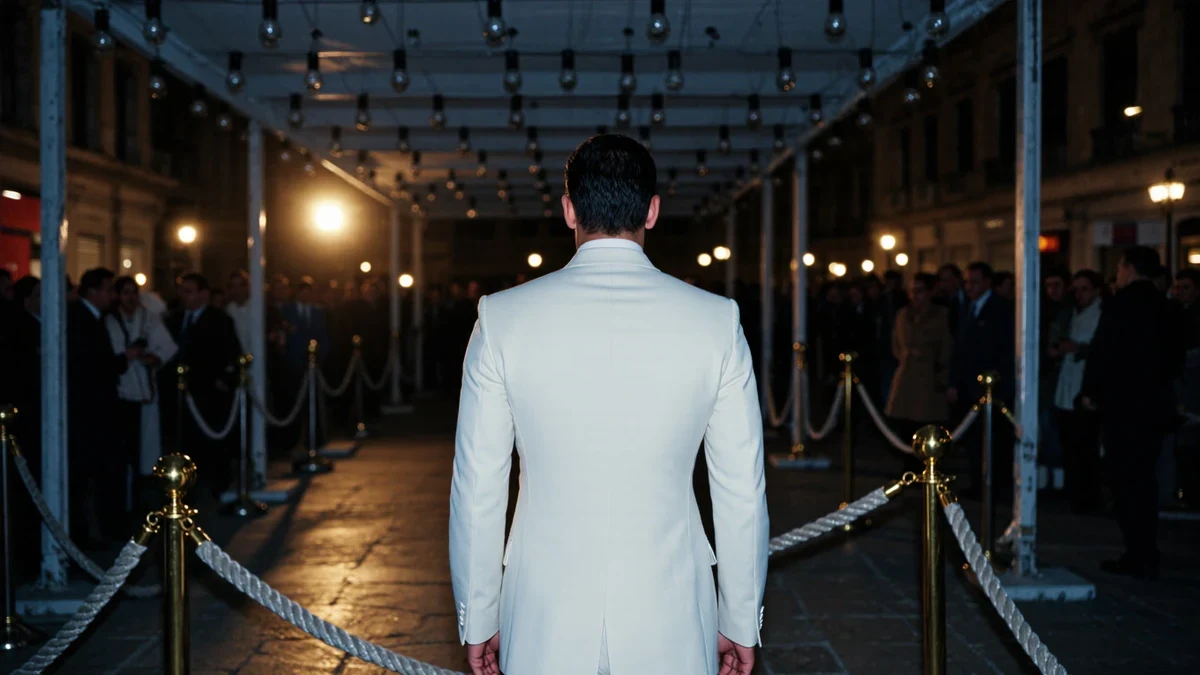
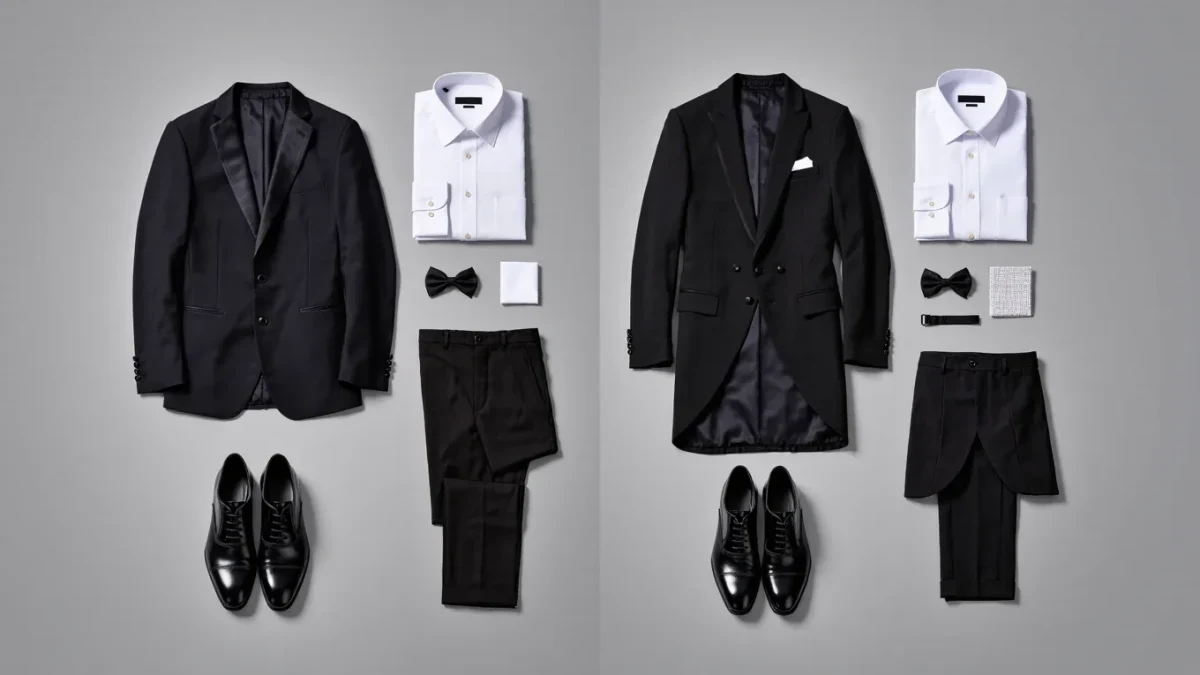
Black tie means a dinner jacket with silk or grosgrain lapels, matching trousers with a side stripe, a formal white shirt, a bow tie and polished black shoes. The jacket is most classically black or midnight blue, a color that reads deeper than black under camera lighting. A white dinner jacket appears in warm climates and summer events. Everything in the category is after-six clothing by convention.
How is a tuxedo different from a suit?
The fabric of the lapel. A tuxedo, also called a dinner suit, has facings of satin or grosgrain on the lapels, down the trouser seam and often on pocket trims. A business suit has none of that sheen and is cut from a single cloth throughout. Wearing a dark business suit to a black tie event reads as underdressed on camera because the flash flattens matte fabric and removes the contrast that makes formal wear photograph well.
What is white tie and when does it apply?
White tie is the most formal code in Western dress and appears rarely outside state dinners and certain opera or gala traditions. It requires an evening tailcoat, trousers with double braiding, a white pique waistcoat, a white wing collar with a white bow tie, and traditionally silk accessories. On the Met Gala steps and royal occasions it resurfaces, and its rarity is precisely why it photographs as an event of consequence.
What does creative black tie allow?
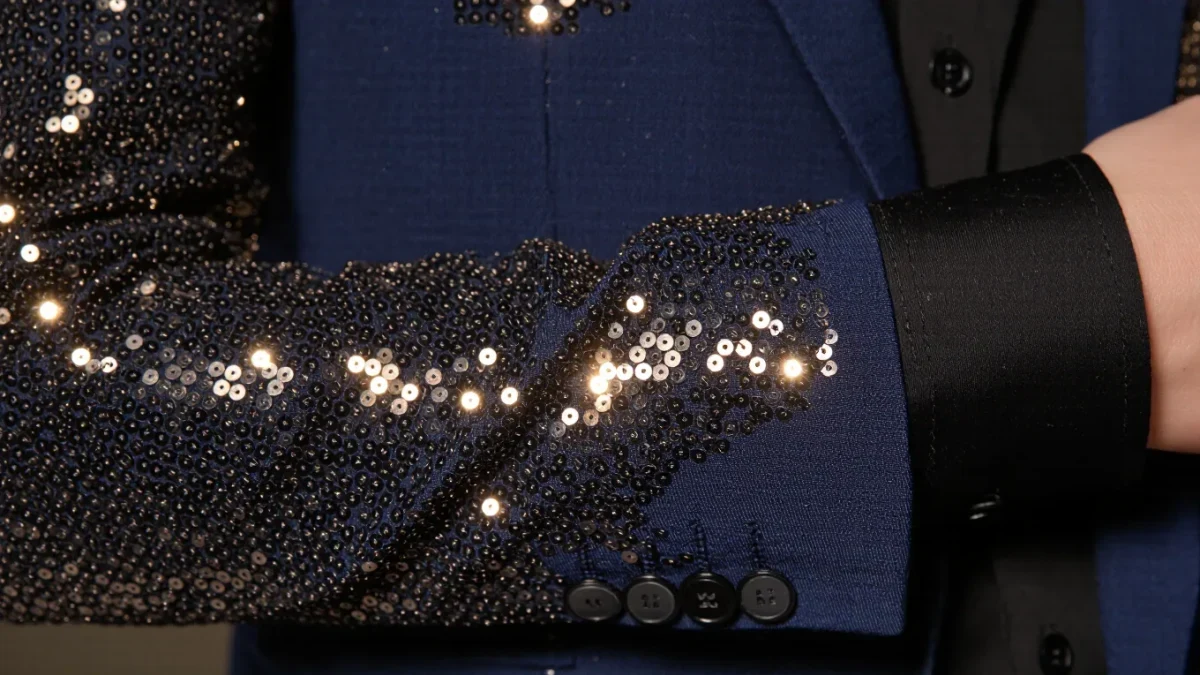
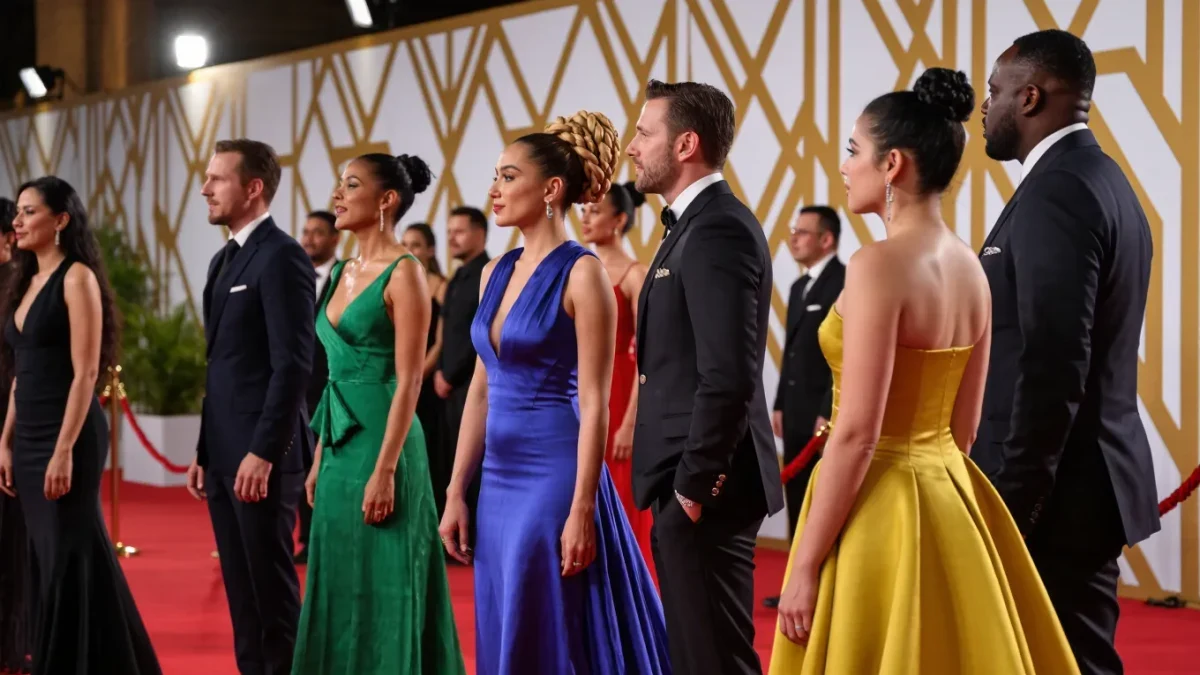
Creative black tie is the code that has produced most of the memorable men's red carpet looks of the past decade. The foundation stays formal, a dinner jacket and tailored trousers, but the rules loosen: colored or embroidered jackets, unexpected shirts, jewelry, sneakers in some fashion contexts. Actors have used the category to turn menswear into a statement lane, and design houses now build runway pieces specifically for it.
Which shoes and accessories are correct?
With classic black tie, black patent or highly polished leather opera pumps or oxfords are correct, worn with thin formal socks or silk ones. Accessories are minimal by design: a dress watch or none, cufflinks if the shirt takes them, a pocket square in white linen or silk. Cummerbunds and waistcoats cover the trouser waistband and are interchangeable within tradition. A wristwatch with a fabric or rubber strap is the most common error in otherwise strong formal looks.
How should a formal jacket fit?
The shoulder seam should end where the shoulder ends, with no divot and no overhang. The jacket closes without an X of tension across the button, the sleeve shows a centimeter or so of shirt cuff, and the trousers break lightly at the shoe. Formal wear is altered more aggressively than daywear because it is worn standing and walking in front of cameras. Nearly every sharp red carpet silhouette is the product of tailoring done for that specific body, often days before the event.
What about daytime formal events?
Daytime formality has its own category, the morning dress: a morning coat, striped trousers, waistcoat and tie, standard at British royal daytime occasions and some weddings. For most public daytime events, a dark suit with a crisp shirt answers the brief. The principle across every code is the same: match the level of the event, then let fit and fabric do the talking.
Can a man wear color to a formal event?
Yes, and increasingly he does. Midnight blue is the traditional alternative to black, and recent red carpet seasons have normalized burgundy, forest green, ivory and embellished dinner jackets within black tie parameters. The safest strong move is a colored jacket with classic black trousers, which keeps the look anchored. What matters is that the color reads as a decision, with the rest of the outfit disciplined around it.